
The first week in a new home is a strange mix of excitement and exhaustion. Everything is new, nothing is where you expect it, and every room seems to ask for attention at the same time. You do not need to finish the house this week. You need to sleep well, eat properly, keep your routine going and start to feel at home.
Jump to the 15 tips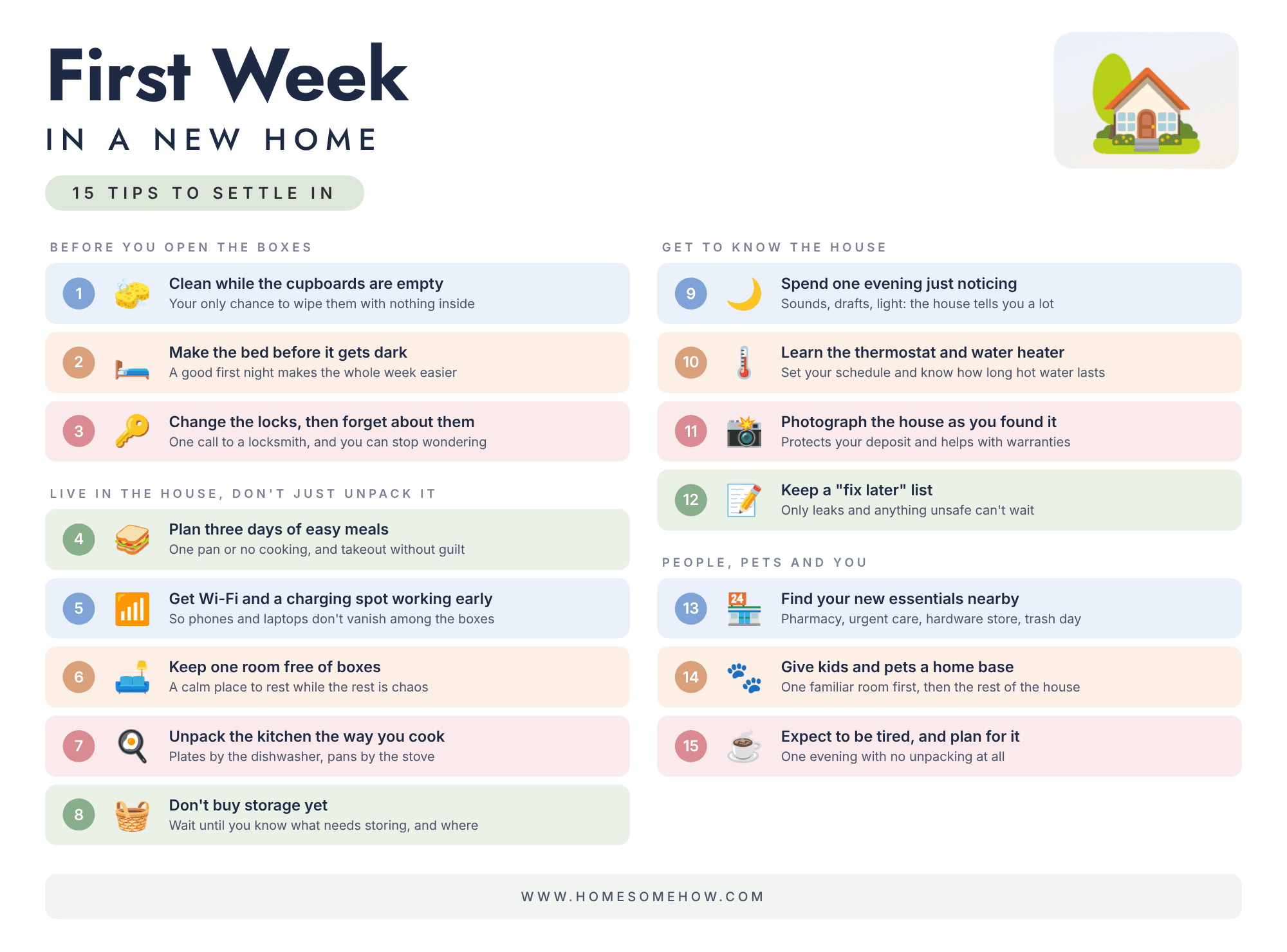
These tips are about living through those first days. If you want the full step-by-step list of tasks, such as locks, alarms, shutoffs and paperwork, you will find it in our checklist for the first 30 days in a new home.
Before you open the boxes
1. Clean while the cupboards are empty
This is the only moment the kitchen cabinets, the fridge, the closets and the bathroom drawers will ever be completely empty. Wipe them before you fill them. It takes an hour or two, and you will not get another chance this easy. Start with the kitchen and bathroom, because they are the first places you will unpack.
2. Make the bed before it gets dark
After a moving day, nobody wants to look for sheets at 11 p.m. Assemble the bed, put on clean sheets and set up a lamp as soon as the furniture arrives. A good first night’s sleep makes the rest of the week much easier.
3. Change the locks, then forget about them
If you bought the home, you do not know who still has a key. Book a locksmith to rekey the locks in the first few days and change the garage and door codes. It is one call, and afterwards you can stop wondering.
Live in the house, don’t just unpack it
4. Plan three days of easy meals
Cooking in a kitchen full of boxes is frustrating. Plan simple meals for the first three days: things that need one pan or no cooking at all. Find the nearest grocery store on the first day, and allow yourself takeout without guilt. Eating well is part of settling in.
5. Get the internet and a charging spot working early
If you work or study from home, Wi-Fi is not a luxury in your first week in a new home. Book the installation before you move if you can, and choose one outlet near the entrance or the kitchen as the charging station for phones and laptops, so they do not get lost among the boxes.
6. Keep one room free of boxes
Choose one room, usually the bedroom or the living room, and keep it box-free from the first or second day. Stack everything else in the rooms it belongs to. Having one calm space to rest in makes a big difference when the rest of the house still looks like a warehouse.
7. Unpack the kitchen the way you cook
Before you fill the cupboards, stand in the kitchen and think about how you use it: plates near the dishwasher, pans near the stove, coffee and cups together, cleaning products under the sink. Ten minutes of thinking now saves you months of walking back and forth. Our guide to organization zones explains the idea.
8. Don’t buy storage yet
It is tempting to go straight to the store for baskets, bins and shelves. Wait. After a week or two you will know what really needs storing and where, and the cabinets will be measured instead of guessed. The baskets you buy on day two rarely fit.
Get to know the house
9. Spend one evening just noticing
Every house has its own sounds, drafts and habits. Spend an evening paying attention: which room gets cold, which door slams, where the light falls in the morning, whether you hear the street at night. It tells you more about where furniture should go than any plan.
10. Learn the thermostat and the water heater
The previous owners’ thermostat schedule probably does not match your routine. Set it to your hours on the first day. Find out how long the hot water lasts, too, before three people need a shower on the same morning.
11. Photograph the house as you found it
Take dated photos of every room, especially existing damage, before your furniture covers it. If you rent, this protects your security deposit. Rules vary by state: in Massachusetts, for example, the landlord should give tenants a “statement of condition” within 10 days, and tenants have 15 days to add to it, according to the state’s Attorney General’s guide. If you bought, the photos help with warranty claims and with your home inventory. If you want to keep those photos, manuals and receipts together from the start, have a look at how to create a home maintenance binder.
12. Keep a “fix later” list, not a “fix now” one
You will notice dozens of things: a dripping faucet, a loose cabinet door, a paint color you dislike. Write them all in one note on your phone instead of trying to fix them this week. Only real problems, such as leaks, electrical issues or anything unsafe, need attention now. Knowing where your emergency shutoffs are helps with those. And if you are tempted to tackle the small fixes yourself later on, our essential tool kit for first-time homeowners lists what is worth having at home.
People, pets and you
13. Find your new “essentials” nearby
Look up the nearest pharmacy, urgent care clinic, hardware store and grocery store, and find out which day the trash and recycling are collected. Say hello to at least one neighbor. Neighbors know things no website tells you, like which corner floods when it rains or which plumber is reliable.
14. Give children and pets a home base
For children, set up their room early and keep their usual routines for meals and bedtime, even if dinner is on a box. For pets, the ASPCA recommends starting with one room as a “home base”, with their bed, toys, food, water and, for cats, the litter box, and introducing the rest of the house gradually once they seem comfortable. Check for loose cords, gaps they could hide in and open windows before you let them explore.
15. Expect to be tired, and plan for it
Moving is physically and mentally draining, and the first week in a new home often feels harder than moving day itself. Plan one evening with no unpacking at all. Order dinner, sit on the sofa, look at what you have already done. The boxes will still be there tomorrow, and you will deal with them better after a rest.
After the first week
By the end of your first week in a new home, you should be sleeping well, eating properly and able to find what you need every day. Everything else, from the inspection report to the home file and the repair list, can follow week by week. Our 30-day new home checklist shows you what to do next.
Frequently asked questions
What should I do on the first day in a new home?
Check that water, power and heating work, make the bed, set up one bathroom, and keep your essentials bag (medication, chargers, documents, clothes) close. Clean the kitchen cupboards before unpacking if you have the energy.
How long does it take to feel at home after moving?
It varies a lot from person to person. Getting the bedroom, bathroom and kitchen working in the first few days, keeping your routines and spending time in the house without unpacking all help it feel like yours sooner.
Should I unpack everything in the first week?
No. Unpack what you need every day, keep one room box-free and leave the rest for the following weeks. Rushing often means putting things in the wrong place and reorganizing later.