Winter tests the inside of a home as much as the outside. The heating runs for hours, windows stay closed, the fireplace and space heaters come out, and in December the house fills with lights, candles and a tree. Most winter problems inside the home, from a furnace that fails on the coldest night to a fire that starts near the tree, can be prevented with a few checks done before the first freeze.
This winter home maintenance checklist covers the inside of the house: heating, drafts, humidity, alarms, the fireplace, space heaters and holiday safety. For the outside (pipes, snow, ice dams and the roof), see our guide on how to prepare your home for freezing temperatures.
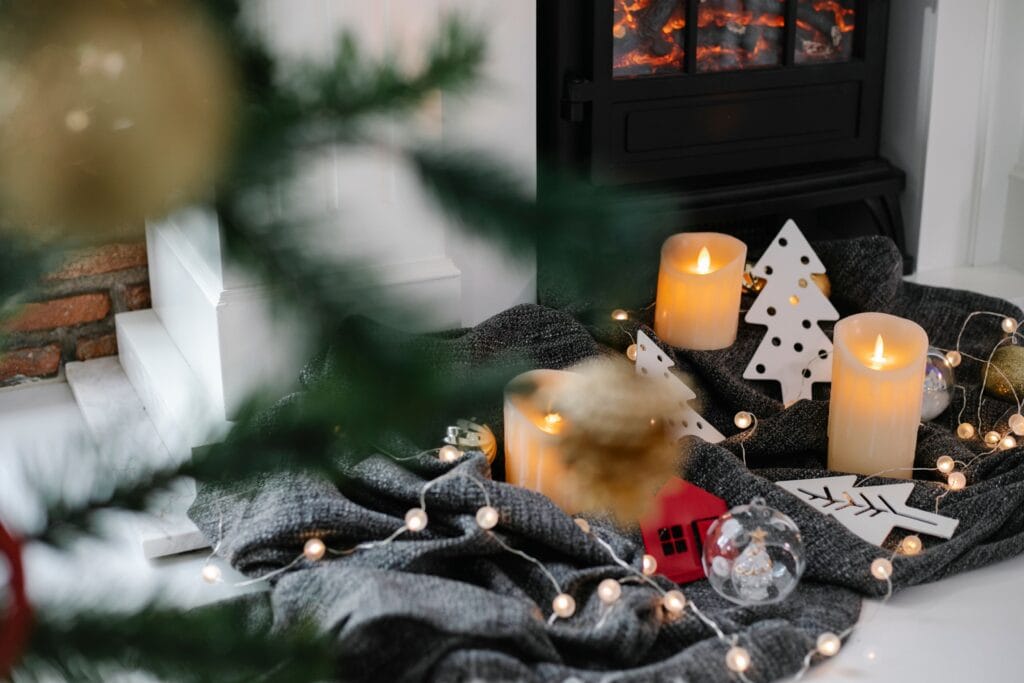
Winter home maintenance checklist at a glance
| Task | When | Time |
|---|---|---|
| Test-run the heating and book the annual inspection | Early fall | 30 min + visit |
| Find and seal drafts around doors and windows | Early fall | 1–2 hours |
| Check indoor humidity and clean the humidifier | When the heating starts | 15 min |
| Test smoke and carbon monoxide alarms | Before winter, then monthly | 10 min |
| Have the chimney and fireplace inspected | Before the first fire | Professional visit |
| Check space heaters and their cords | Before first use | 10 min |
| Prepare an indoor power outage kit | Before the first storm | 30 min |
| Inspect holiday lights and extension cords | Before decorating | 20 min |
| Place the tree and candles away from heat sources | When decorating | — |
1. Test the heating before you need it
The worst time to discover a heating problem is the first cold night, when every technician in town is booked. Turn the heat on in early fall, while the weather is still mild, and go through the house:
- Does the thermostat respond, and does the system start within a few minutes?
- Does warm air (or heat from the radiators) reach every room, including the ones you rarely use?
- Are any vents or radiators blocked by furniture, curtains or rugs? Blocked vents make the system work harder and leave rooms cold.
- Are there unusual noises, a burning smell that lasts more than the first few minutes, or repeated shutdowns? Those are reasons to call a technician, not to keep it running.
A little dust smell during the first minutes of the season is normal. Anything that smells of gas, fuel or hot plastic is not: turn the system off and call a professional, or the gas company if you smell gas.
Book the annual inspection now. The U.S. Fire Administration recommends having heating equipment and chimneys cleaned and inspected each year by a professional. If your heating uses a forced-air system, check the filter at the same time; our guide on how often to change your HVAC filter explains how to choose the right schedule. If you have hot-water radiators that stay cold at the top, they may need bleeding, which the system’s manual explains.
2. Find and seal drafts
Drafts make a room feel colder than the thermostat says, so you turn the heat up and pay more. And they are not only around windows. According to Virginia Cooperative Extension, the most common air leaks in a home are:
| Where air leaks | Share of leaks |
|---|---|
| Ceilings, walls and floors | 31% |
| Ducts | 15% |
| Fireplaces | 14% |
| Plumbing penetrations | 13% |
| Doors | 11% |
| Windows | 10% |
How to find them
- On a windy day, move your hand slowly around windows, doors, outlets on exterior walls, the attic hatch and the gaps where pipes go through walls under sinks.
- The dollar bill test: close a door or window on a dollar bill. If it slides out easily, the weatherstripping is worn.
- The flashlight test: at night, with one person inside and one outside, shine a flashlight around the closed door. Light coming through means air is coming through too.
How to fix them
Match the material to the gap. The same Extension guide recommends caulk for gaps up to 1/4 inch, aerosol foam sealant for holes up to 1/2 inch, foam backer rod plus caulk for larger openings, and weatherstripping for anything that moves, like doors and windows. A door sweep closes the gap under an exterior door in ten minutes. For old single-pane windows, a window insulation film kit, applied with a hair dryer, is a cheap fix for the winter.
Never seal vents, weep holes in window frames or the air supply of a furnace, water heater or fireplace. Homes with fuel-burning equipment need that air. If you don’t know what an opening is for, find out before you cover it.
3. Control humidity and condensation
Winter air is dry outside, but inside, cooking, showers and drying clothes can raise the humidity against cold windows. The EPA recommends keeping indoor humidity below 60 percent, ideally between 30 and 50 percent, to prevent mold. A small digital hygrometer costs a few dollars and tells you exactly where you are.
- Water running down the windows every morning means the humidity is too high for the season. Run the bathroom fan during and after showers, use the range hood when cooking, and dry clothes in the dryer or in a ventilated room.
- Dry skin, static and cracking wood furniture mean it is too low. A humidifier helps, but clean it as the manufacturer says, because standing water grows mold and bacteria.
- Wipe condensation from window sills in the morning, so it doesn’t damage the paint or wood.
4. Test smoke and carbon monoxide alarms
Winter is the season of heaters, fireplaces and generators, so alarms matter more than ever. Press the test button on every smoke alarm and every carbon monoxide (CO) alarm. The U.S. Fire Administration recommends testing smoke alarms monthly and replacing the whole alarm every 10 years; the date is usually printed on the back.
For carbon monoxide, the Consumer Product Safety Commission recommends CO alarms on every level of the home and outside sleeping areas, with batteries or battery backup. If you have a gas furnace, gas water heater, fireplace or attached garage and no CO alarm, buy one this week. If a CO alarm sounds, get everyone outside to fresh air and call 911; don’t look for the source.
5. Get the fireplace ready
A chimney collects creosote, a flammable residue, every time you burn wood. Have it inspected and cleaned before the first fire of the season, as the U.S. Fire Administration recommends for all heating equipment. Then:
- Check that the damper opens and closes fully. Open it before lighting a fire and close it when the fireplace is cold, or warm air from the house escapes up the chimney.
- Use a sturdy screen in front of the fire, and burn only dry, seasoned wood. Never burn wrapping paper, cardboard or trash.
- Put ashes in a metal container with a lid, and keep it outside, away from the house. Ashes can stay hot for days.
- Never leave a fire burning when you go to bed or leave the house.
6. Use space heaters safely
Space heaters are useful in a cold room, but they are also the most dangerous part of winter heating. The U.S. Fire Administration reports that portable heaters were involved in only 3% of home heating fires but 41% of fatal ones. Before you use one this winter:
- Check the cord and plug for damage, and choose a heater with a tip-over switch and overheat protection.
- Keep anything that can burn (curtains, bedding, clothes, paper, the Christmas tree) at least 3 feet away.
- Plug it directly into a wall outlet, never into an extension cord or power strip.
- Turn it off when you leave the room or go to bed.
- Never use the oven or a gas stove to heat your home.
7. Prepare an indoor power outage kit
Winter storms can cut the power for hours or days. Keep a box in an easy-to-reach closet with flashlights and spare batteries, a battery or hand-crank radio, phone power banks, extra blankets, a first aid kit, any medicines you need and bottled water. Know where your emergency shutoffs are before the storm.
During an outage, keep the fridge and freezer closed. FoodSafety.gov explains that a refrigerator keeps food safe for up to 4 hours, and a full freezer for about 48 hours (24 hours if it is half full), as long as the doors stay shut. Close the doors of rooms you are not using and gather in one room to keep the heat in.
8. Before the holidays: lights, tree and candles
December is when winter maintenance meets decorating, and it is also the riskiest month for home fires. According to the Maryland state government, citing NFPA data, one in every three home Christmas tree fires is caused by electrical problems, and a heat source too close to the tree causes about one in four. December is also the peak month for candle fires.
Lights and extension cords
- Before you hang them, plug in every string of lights and check for broken bulbs, cracked sockets and frayed wires. Throw away damaged sets.
- The CPSC advises to never string together more than three sets of incandescent lights and never overload electrical outlets.
- Use only lights and extension cords rated for outdoor use outside.
- Turn the lights off when you go to bed or leave the house. A plug-in timer makes it automatic.
- Don’t run cords under rugs or pinch them in doors, where they can overheat.
The tree
- A fresh tree has green needles that don’t fall when you touch them. Cut a little off the base before you put it in the stand, and water it every day: a dry tree burns very fast.
- For artificial trees, the CPSC recommends looking for the “fire resistant” label.
- Place the tree at least 3 feet from radiators, space heaters, the fireplace and candles, and away from the door, so it doesn’t block the way out.
- Take a real tree out of the house after the holidays, when it starts drying out.
Candles
More than half of home candle fires start when something that can burn is too close to the candle. Keep candles in sturdy holders, away from curtains, decorations and the tree, and blow them out before leaving the room. The CPSC recommends using flameless candles whenever possible; in a home with children or pets, they are the easy choice.
If you are expecting visitors, our guide on how to prepare your home for holiday guests has a two-week plan for the rest of the preparations.
Homes with children or pets
- Choose space heaters that stay cool on the outside, and keep children and pets out of the 3-foot zone around any heater or fireplace.
- Hang glass ornaments and lights higher on the tree, out of reach of small children and pets, and anchor a large tree so it can’t tip over.
- Keep the tree water covered: pets may drink it, and some trees are treated with preservatives.
- Store batteries for remotes, toys and decorations out of reach; button batteries are especially dangerous if swallowed.
If you rent
Your landlord is usually responsible for the heating system, the chimney and the smoke and CO alarms, but you are often responsible for testing the alarms and replacing their batteries. Report heating problems and drafty windows in writing before winter, and check your lease before using a space heater or decorating with lights on the outside of the building.
Write down what you checked and when; a home maintenance binder keeps the alarm dates, the heating inspection and the filter changes in one place for next winter.
Frequently asked questions
When should I start winter home maintenance?
In early fall, before the first freeze in your area. That gives you time to book the heating inspection and the chimney sweep before they get busy, and to fix drafts while the weather is still mild.
What humidity should my house be in winter?
Between 30 and 50 percent, according to the EPA, and always below 60 percent. If water runs down your windows every morning, it is too high; if you get static shocks and dry skin, it is probably too low.
How far should a Christmas tree be from a heater or fireplace?
At least 3 feet, the same distance the U.S. Fire Administration recommends for anything that can burn. Keep it away from candles too, and water a real tree every day.