Freezing weather is much easier to handle when the work is done before the cold arrives. A pipe that bursts in January usually starts with a garden hose left connected in November, a cabinet door closed against a cold wall or a thermostat turned too low while you were away.
This guide shows how to prepare your home for freezing temperatures and snow from the outside in: the pipes and exterior to protect before winter, what to do 24 to 48 hours before a freeze, how to handle snow and ice around the house, and what to do if a pipe freezes or bursts. It works for homeowners and renters, in cold states and in mild ones, where homes are often less prepared for a hard freeze.
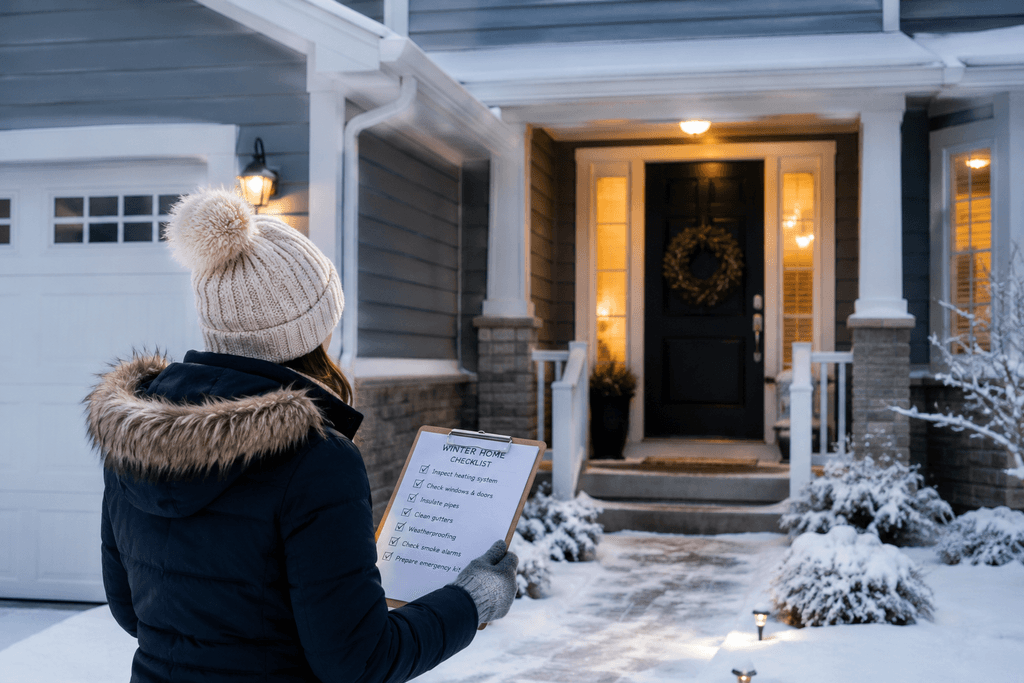
Why some homes freeze and others don’t
Water freezes at 32°F (0°C), but a pipe does not burst the moment the temperature drops. The risk depends on how cold it gets, for how long, wind, and where the pipes run. The most vulnerable are outdoor faucets, sprinkler lines, and pipes in unheated spaces: crawl spaces, garages, attics, and kitchen or bathroom cabinets on exterior walls. Homes in the South are often at higher risk during a cold snap, because their plumbing was not designed for long freezes.
Before winter: protect the pipes and the outside
Do these freeze-specific tasks in the fall, before the first freeze in your area. Treat the first freeze as a deadline, not as the day to start. Indoor jobs like the heating, drafts, alarms and space heaters are in our winter home maintenance checklist; this guide focuses on the pipes and the outside of the house.
| Task | Why it matters |
|---|---|
| Disconnect, drain and store garden hoses; close the inside valves for outdoor faucets | Outdoor faucets are one of the first places to freeze |
| Find the main water shutoff and make sure everyone knows where it is | If a pipe bursts, every minute counts |
| Drain and shut off sprinkler lines and outdoor kitchens or pools | Water left in outdoor lines expands and cracks them |
| Insulate exposed pipes in the crawl space, garage or attic | Pipe sleeves are cheap and easy to fit |
| Clear gutters and point downspouts away from the house | Blocked gutters help ice dams form |
| Find the exterior vents of the furnace, dryer and water heater | Snow must never cover them |
| Open cabinet doors you will need to leave open, and clear what is under the sinks | Saves time when the freeze warning arrives |
| Buy snow tools and ice melt before the first storm | Stores run out as soon as snow is forecast |
Outdoor water
The American Red Cross advises to remove, drain and store hoses used outdoors and close the inside valves that supply outdoor hose bibs. Then open the outdoor faucet to let the remaining water drain. Some homes have frost-free faucets; sprinkler systems and pools usually need their own winterization, often by a professional.
Locate the main water shutoff while you are at it. If you don’t know where it is, our guide on how to find and label your home’s emergency shutoffs shows where to look. Keep a wrench next to it if the valve is stiff.
Exposed pipes
Look for water pipes in the crawl space, the garage, the attic and inside cabinets on exterior walls. Foam pipe sleeves from any hardware store slide over them and close with their own adhesive strip; you only need scissors. For pipes that froze in past winters, the Red Cross also mentions heat tape, installed exactly as the manufacturer says. Close crawl space vents in winter if your home has them, and seal gaps where pipes enter the house from outside.
24 to 48 hours before a freeze
Your signal is the forecast. The National Weather Service issues a Freeze Watch when significant, widespread freezing temperatures are possible within 24 to 36 hours, and a Freeze Warning when temperatures are forecast to stay below 32°F for a long period. When you see either one, follow these steps, most of them from the Red Cross guidance on frozen pipes:
- Keep the thermostat at the same temperature day and night. Lowering it at night saves a little money but leaves pipes in cold walls exposed.
- Open the kitchen and bathroom cabinet doors under sinks on exterior walls, so warm air reaches the pipes. Move cleaning products out of reach of children and pets first.
- Let cold water drip from faucets served by exposed pipes. Moving water is less likely to freeze.
- Keep the garage door closed if there are water lines in the garage.
- Charge phones and power banks, and check that flashlights work, in case the power goes out.
- Put the shovel and ice melt by the door, not at the back of the garage.
- Follow your water utility’s instructions. Some cities ask residents not to drip faucets during a freeze to protect water pressure.
If you are away during freezing temperatures
Never turn the heat off. The Red Cross recommends leaving it on at a temperature no lower than 55°F. For a long trip, consider shutting off the main water valve and opening the faucets to drain the lines, and ask a neighbor or friend to check the house every day. A temperature sensor connected to your phone can warn you if the heating fails.
Snow and ice around the house
Ice dams on the roof
An ice dam is, in the words of the University of Minnesota Extension, a ridge of ice that forms at the edge of a roof and prevents melting snow from draining off. Heat escaping from the house melts the snow on the upper roof, and the water refreezes at the colder edge. The trapped water can then leak into ceilings and walls. Large icicles along the gutters are the usual warning sign.
- After heavy snow, pull the snow off the lower part of the roof with a roof rake, standing on the ground.
- Don’t climb on a snowy roof or chip the ice with a hammer or an axe: you can fall or damage the shingles. Call a professional instead.
- For the long term, the Extension recommends sealing air leaks into the attic and adding attic insulation, so less heat reaches the roof.
Vents, walkways and the meter
- Exterior vents: after every snowfall, check from the ground that the vents of the furnace, dryer and water heater are not covered. A blocked vent can push carbon monoxide back into the house.
- Walkways and steps: shovel early, before the snow is packed down, and spread ice melt or sand on steps and the path to the door. Follow the label: some products damage new concrete or irritate pets’ paws.
- Gas meter and outdoor faucets: brush snow off the gas meter gently and keep a path to it. Don’t hit it with the shovel.
- Branches: heavy snow brings down branches. Keep cars and people away from trees that hang over the driveway, and report branches on power lines to the utility.
Generators during a power outage
Snowstorms often cut the power. If you use a portable generator, the Consumer Product Safety Commission says to never use it inside the home or garage, even with the doors open, and to run it outside at least 20 feet from the house with the exhaust pointing away. Clear the snow around it first, and never put it under a window.
How to tell if a pipe is frozen and how to thaw it
The usual sign is a faucet that gives only a trickle or nothing at all, while others work. You may also see frost on an exposed pipe or a bulge in it. If you think a pipe is frozen:
- Keep the faucet open. As the ice melts, running water helps melt the rest.
- Warm the section of pipe with a hair dryer, an electric heating pad or towels soaked in hot water, starting from the faucet end.
- Never use a torch, a propane or kerosene heater, or any open flame: the Red Cross warns against them because of the fire risk.
- Check the other faucets in the house: if one pipe froze, others may too.
Call a plumber if you can’t find the frozen section, can’t reach it, or can’t thaw it. If the frozen pipe is inside a wall, do not try to open the wall yourself.
If a pipe bursts
- Shut off the main water valve immediately.
- If water is near outlets, appliances or the electrical panel, turn off the power to that area only if you can reach the panel safely without standing in water.
- Open the faucets to drain the remaining water from the lines.
- Call a plumber, and your landlord if you rent.
- Take photos and videos of the damage before you clean up, and call your insurance company. Keep every invoice; a home maintenance binder makes the claim much easier.
After temperatures rise
Some damage only shows when the ice melts. In the first warm days after a freeze, check under sinks, around the water heater, in the crawl space or basement, and the outdoor faucets for drips, damp spots or a water bill that suddenly rises. Look at the ceilings near exterior walls for stains from ice dams. Run each faucet for a moment and listen for hissing in the walls, which can mean a hidden leak. If the water meter keeps moving when no water is running, call a plumber.
If you rent
You can still do most of the work: disconnect hoses, open cabinets, keep the heat on and let faucets drip. Check your lease to see who clears snow from walkways and steps. Ask your landlord or property manager before the winter where the main shutoff is and who to call in an emergency, and report drafts, heating problems or exposed pipes in writing. If you travel, check your lease: many require you to keep the heat on during winter.
Frequently asked questions
At what temperature do pipes freeze?
Water freezes at 32°F, but pipes in heated areas usually freeze only when it stays much colder for several hours. Pipes outdoors, in unheated spaces or on exterior walls are at risk first.
Should I drip all my faucets during a freeze?
Only the ones served by exposed pipes or on exterior walls, unless your water utility says otherwise. A slow drip of cold water is enough.
What temperature should I leave my house at when I’m away in winter?
No lower than 55°F, according to the American Red Cross. Never turn the heating off completely during freezing weather.