Fruit flies seem to appear out of nowhere: one day there’s a banana on the counter, the next there’s a small cloud of tiny flies around the fruit bowl, the trash can and the sink. They don’t bite and they don’t carry the diseases house flies do, but they multiply fast and they are hard to get rid of if you only chase the adults.
The good news is that fruit flies follow very predictable rules. If you understand where they breed, you can get rid of fruit flies in your house in a few days with things you already have in the kitchen, and keep them from coming back. This guide shows you how to identify them, find every breeding spot, build a trap that works and set up a simple routine for the rest of the season.
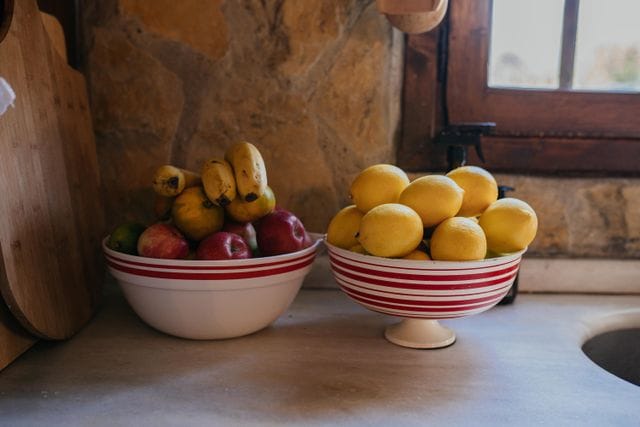
Why you suddenly have fruit flies
Fruit flies are drawn to anything ripe or fermenting. According to University of Kentucky entomologists, an adult is only about 1/8 inch long, a female can lay about 500 eggs, and the whole life cycle from egg to adult can take about a week. That’s why a couple of flies on Monday can be dozens by the weekend.
They often arrive as eggs or larvae on fruit from the store, or fly in through a window or door when the weather is warm. Late summer and fall are the peak season: more fresh produce in the kitchen, warm temperatures and windows left open.
First, make sure they are fruit flies
Several tiny flies look alike, and each one breeds in a different place. Treating the wrong one is the most common reason the problem never ends. University of Kentucky’s guide to small flies describes the differences:
| Fly | What it looks like | Where you see it | Where it breeds |
|---|---|---|---|
| Fruit fly | About 1/8 inch, tan or brown-black body, often red eyes | Around fruit, trash, recycling, the kitchen sink | Overripe fruit and vegetables, fermented liquids, drains |
| Fungus gnat | Slender, black, long legs and antennae, looks like a tiny mosquito | Around houseplants and windows | Moist potting soil |
| Drain fly | Fuzzy, looks like a miniature moth, gray-brown | On bathroom and kitchen walls near drains | The slimy film inside drains |
| Phorid fly | About 1/8 inch, light brown with a humped back | Running on surfaces rather than flying | Decaying organic matter, sometimes a broken pipe |
If the flies hover around houseplants, read about fungus gnats and drain flies instead; the steps below won’t fix those. If they look like fruit flies, keep going.
How to get rid of fruit flies: the 48-hour plan
The traps you see everywhere online catch adults, but they don’t stop new flies from hatching. The Texas A&M AgriLife Extension Service is clear about this: insecticides alone are rarely successful against indoor flies, and once the breeding areas are cleaned up you shouldn’t need them at all. So the order matters:
| When | What to do | Why |
|---|---|---|
| Hour 1 | Remove or refrigerate all ripe fruit; take out the trash and recycling | Cuts off their food and egg-laying sites |
| Hour 1–2 | Hunt down hidden breeding spots (list below) and clean them | Stops the next generation |
| Hour 2 | Clean the sink drain and garbage disposal | A common hidden source |
| Hour 2 | Set 2–3 traps where you see the most flies | Catches the adults that are left |
| Next 2 days | Empty and refill the traps, keep fruit in the fridge, take trash out daily | No new eggs, adults die off |
| Day 3 | Count the flies in the traps | If you still catch many, there’s a breeding spot you missed |
Step 1: Find every place they can breed
This is the step that actually ends the problem. University of Kentucky lists drains, garbage disposals, empty bottles and cans, trash containers, mops and cleaning rags as breeding sites, besides fruit. Go through this list with a flashlight:
- The fruit bowl, and the bottom of it, where a single soft grape or onion skin can hide.
- Potatoes and onions stored in a cabinet or pantry. One rotten potato at the bottom of a bag is enough.
- The trash can, including under the bag, where liquid collects.
- The recycling bin: wine and beer bottles, soda cans, juice cartons and jars that weren’t rinsed.
- The compost bin or food scrap container.
- Under and behind the fridge, the stove and the microwave, where crumbs and spills collect.
- Damp sponges, dishcloths and mops.
- Pet food bowls and spilled pet food.
- Anything fermenting: kombucha, sourdough starter, homemade vinegar, a forgotten glass of wine.
Throw away anything rotten, wash the containers with hot soapy water and dry them. The Texas A&M guide also suggests checking under trash can liners and cleaning any residue with soap and water.
Step 2: Check and clean the drains
If the flies keep coming back after you’ve cleared the fruit and trash, the drain is the usual suspect. To find out, University of Kentucky suggests taping a clear plastic food storage bag over the opening overnight: if flies are breeding inside, the adults get trapped in the bag.
To clean the drain:
- Remove the stopper or strainer and scrub off the gunk underneath with an old toothbrush.
- Scrub the inside of the drain pipe as far as you can reach with a long, thin drain brush. The film on the walls is what they feed on.
- Flush with plenty of hot water.
- If you have a garbage disposal, run it with cold water and a handful of ice cubes, then clean under the rubber splash guard, which gets slimy.
Pouring bleach down the drain isn’t a fix: it runs past the film too quickly. Scrubbing works better. If your kitchen sink is also slow, our guide on how to deep clean a greasy kitchen and unclog a slow sink covers the whole process.
Step 3: Make a fruit fly trap that works
Once the breeding spots are gone, traps clean up the adults that are left. These are the three easiest versions:
| Trap | How to make it | Best for |
|---|---|---|
| Vinegar and dish soap | A small bowl or jar with ½ inch of apple cider vinegar and 1–2 drops of dish soap. Stir gently. | The quickest, works on most counters |
| Paper funnel jar | A jar with a few ounces of cider vinegar and a paper cone in the opening, narrow end down, not touching the liquid | Lots of flies; they get in but can’t find the way out |
| Plastic wrap jar | A jar with vinegar and a piece of fruit, covered with plastic wrap held by a rubber band and poked with 4–5 small holes | A trap that doesn’t spill, near the fruit bowl |
The dish soap matters: it breaks the surface tension of the vinegar, so the flies sink instead of landing on top and flying away. Texas A&M notes that apple cider vinegar, red wine, beer, or sugar water with yeast all work as bait, so use whatever you have.
A few tips that make traps work better:
- Put them where you see the most flies, usually next to the fruit bowl, the trash can and the sink.
- Use two or three small traps instead of one big one.
- Replace the bait every two or three days: once it’s full of flies, it attracts fewer.
- Keep traps away from children and pets. They’re harmless but easy to knock over.
What doesn’t work
- Only setting traps. You’ll catch flies for weeks while new ones keep hatching.
- Bug spray in the kitchen. It kills the adults you see, not the eggs and larvae, and it doesn’t belong near food.
- Plain vinegar without soap. Many flies land, drink and leave.
- Throwing the rotten fruit in the kitchen trash. You just moved the nursery a few feet. Take it straight outside.
- Waiting for cold weather. Inside a warm house, fruit flies keep breeding all year.
How long it takes to get rid of fruit flies
Expect about a week to be completely free of them. Because the life cycle from egg to adult takes about a week, eggs laid before you cleaned up can still hatch over the next few days. That doesn’t mean the plan failed. What matters is the trend:
- Days 1–2: the traps catch a lot. These are the adults that were already flying around.
- Days 3–5: you should see far fewer new flies, maybe one or two a day around the sink or the trash.
- Days 6–7: the traps stay almost empty. Keep them out a few more days, then put them away.
If the number goes down and then jumps back up, something new is breeding: a forgotten bag of onions, a bottle under the sink or a drain you haven’t scrubbed. Go back to the list in Step 1 and look again, starting with the places you can’t see from where you stand: under appliances, at the back of cabinets and inside the trash can’s outer bin.
It also helps to write down where you set each trap and how many flies it caught. The trap with the most flies is usually the one closest to the source.
How to keep fruit flies away
Prevention is a handful of small kitchen habits. University of Kentucky’s main advice is simply to refrigerate ripened produce and keep storage areas clean.
| How often | Habit |
|---|---|
| When you get home from the store | Rinse fruit and vegetables and check bags of potatoes and onions for soft ones |
| Every day | Move ripe fruit to the fridge, wipe the counters, rinse bottles and cans before they go in the recycling |
| Every few days | Take out the trash and the food scraps, even if the bag isn’t full; replace or wash sponges and dishcloths |
| Every week | Wash the trash can, scrub the drain stoppers, check the bottom of the fruit bowl and the potato bin |
These habits fit naturally into a nightly kitchen reset. Our 15-minute nightly reset already covers wiping the counters and dealing with the sink, and our weekly cleaning schedule has a slot for the trash can and the drains.
Fruit flies in an apartment or shared kitchen
In a shared kitchen, one person’s forgotten fruit or unrinsed bottles can bring flies for everyone. Agree on two rules: ripe fruit goes in the fridge, and recycling gets rinsed. If you have done everything above and the flies keep coming, especially from a drain, tell your landlord in writing. Flies breeding inside a pipe can point to a plumbing problem behind the wall, which is the building’s responsibility. Our apartment maintenance checklist for renters explains how to report it.
When to call a pest professional
- You still catch many flies a week after removing every breeding spot you can find.
- The flies seem to come from a wall, the floor or a crawl space, which can mean a broken pipe or a hidden source.
- You find flies that run more than they fly, or with a humped back: they may be phorid flies, which often need a professional to find the source.
In most homes it never gets that far. Clear the fruit, clean the trash and the drain, set two or three traps, and in a few days the cloud over the fruit bowl is gone.