Living in a rental does not make every loose handle, slow drain, or water stain your repair project. It also does not mean waiting for an annual inspection to notice that something has changed.
The renter’s most useful role is to keep the apartment reasonably clean, notice problems early, handle minor upkeep only when appropriate, and report repairs through the correct channel. This guide organizes that role into Check, Clean, and Report: observe without dismantling, care for accessible surfaces, and give management enough information to investigate.
Your lease, building rules, appliance instructions, and state or local law determine the exact division of responsibilities. Use this guide as a practical inspection routine—not as a substitute for those documents or for professional advice.
What Apartment Maintenance Should Renters Actually Do?
Everyday upkeep may include wiping spills, using bathroom ventilation, keeping vents unobstructed, and preventing food buildup. Building repair can include diagnosing wiring, opening an HVAC unit, repairing hidden pipes, correcting a recurring moisture source, or replacing a supplied appliance.
A renter can recognize a problem without diagnosing it. You do not need to know whether a ceiling stain comes from plumbing, the roof, or the unit above. Describe where it is, when it appeared, whether it is changing, and whether water is entering now.
Read the Lease Before You Need It
Find the sections covering maintenance requests, emergencies, tenant care, supplied appliances, pests, filters, batteries, balconies, and alterations. Save the normal reporting channel and after-hours number in your phone. Check what requires permission: painting, drilling, replacing hardware, using drain chemicals, installing attachments, changing a lock, or arranging a repair may be restricted even when the work appears minor.
The Check, Clean, or Report Rule
When you find something unusual, classify it before acting:
- Check: Observe the accessible area, confirm what you can see or hear, and note whether the problem is active.
- Clean: Perform ordinary surface care using a product and method appropriate for that material.
- Report: Contact management when the cause requires diagnosis, the problem keeps returning, property is damaged, or safety and essential services may be affected.
The following table is a general decision aid, not a statement of legal responsibility:
| What you notice | What a renter may usually handle | What should usually be reported |
|---|---|---|
| Dust on an accessible vent grille | Vacuum or wipe the exterior gently | Damaged grille, no airflow, strong odor, leak, or unusual HVAC noise |
| Ordinary sink debris | Remove an accessible stopper and surface debris if permitted | Repeated clog, sewage odor, backup, leak, or several slow drains |
| A burned-out standard bulb | Replace it if the lease and fixture allow | Sparking, buzzing, discoloration, heat, or a fixture that still fails |
| A small spill | Blot, clean, and dry it promptly | Water entering from a pipe, ceiling, wall, window, or appliance |
| Light bathroom surface buildup | Clean and improve normal ventilation | Growth or staining that returns, spreads, or accompanies persistent dampness |
| A chirping alarm | Follow the lease and manufacturer instructions for battery or end-of-life signals | Missing, damaged, hardwired, expired, or nonworking alarm |
| A loose personal item | Tighten, move, or reorganize your own property | Loose supplied cabinet, railing, lock, window, or built-in fixture |
If you are unsure, reporting an observation and asking how management wants it handled is safer than guessing.
Quick Apartment Maintenance Schedule
| Frequency | Main purpose | Typical areas |
|---|---|---|
| Weekly | Control spills, food residue, and everyday moisture | Kitchen, bathroom, floors, trash area |
| Monthly | Find small changes before they become established problems | Under sinks, around fixtures, ceilings, windows, appliances, vents, alarms |
| Seasonally | Notice weather- and system-related changes | Heating or cooling, drafts, humidity, balcony or patio |
| Immediately | Protect people and limit active damage | Water intrusion, electrical hazards, loss of essential services, alarms, security failures |
You do not need a separate maintenance day for every row. Most weekly care is already part of cleaning, and the monthly inspection can follow one short route through the apartment.
Weekly Apartment Maintenance Tasks
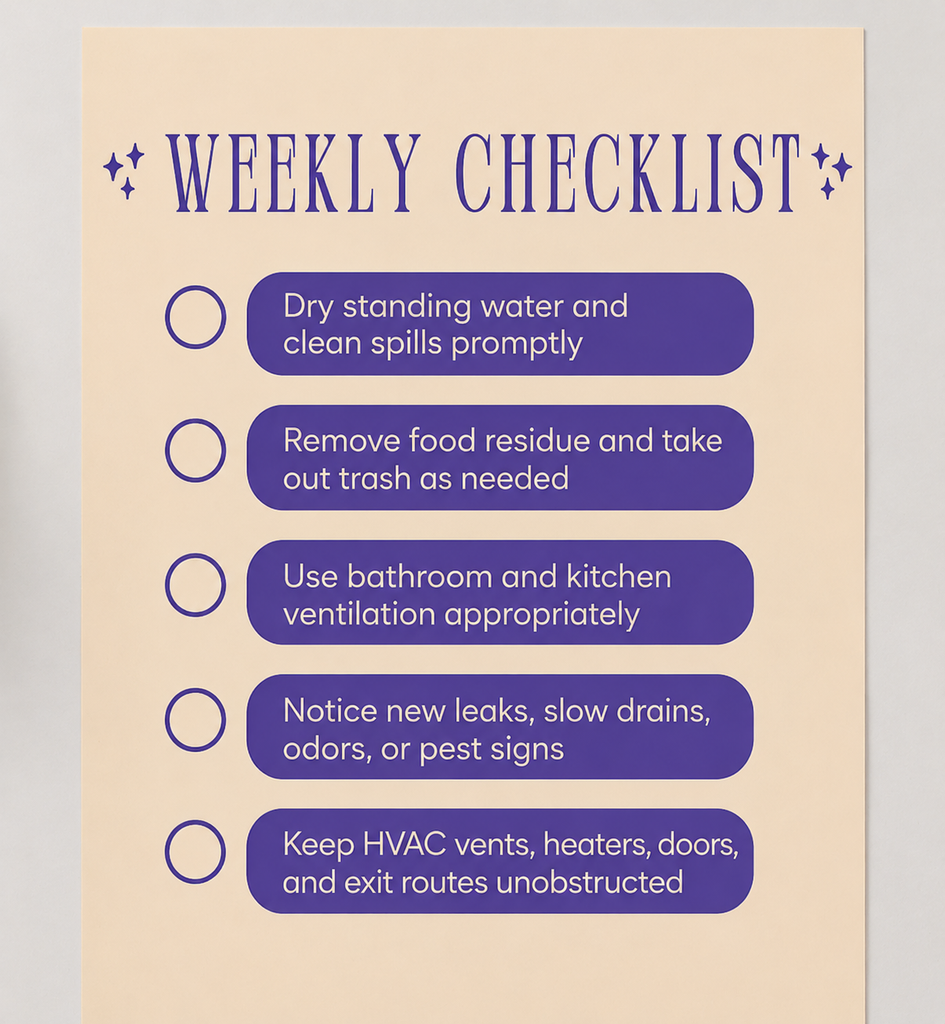
Weekly upkeep is less about repairing objects and more about removing conditions that allow avoidable problems to grow. Wipe standing water from bathroom and kitchen surfaces, use the available ventilation, clean grease and food residue, and empty trash before it attracts pests.
Cleaning also establishes a baseline. A cabinet that was dry last week but feels damp today, a suddenly slow drain, or new pest activity represents a change. Do not keep escalating to stronger drain chemicals; use only permitted, material-appropriate methods and report a persistent or worsening problem.
Copyable Weekly Checklist
The 15-Minute Monthly Renter Walk-Through
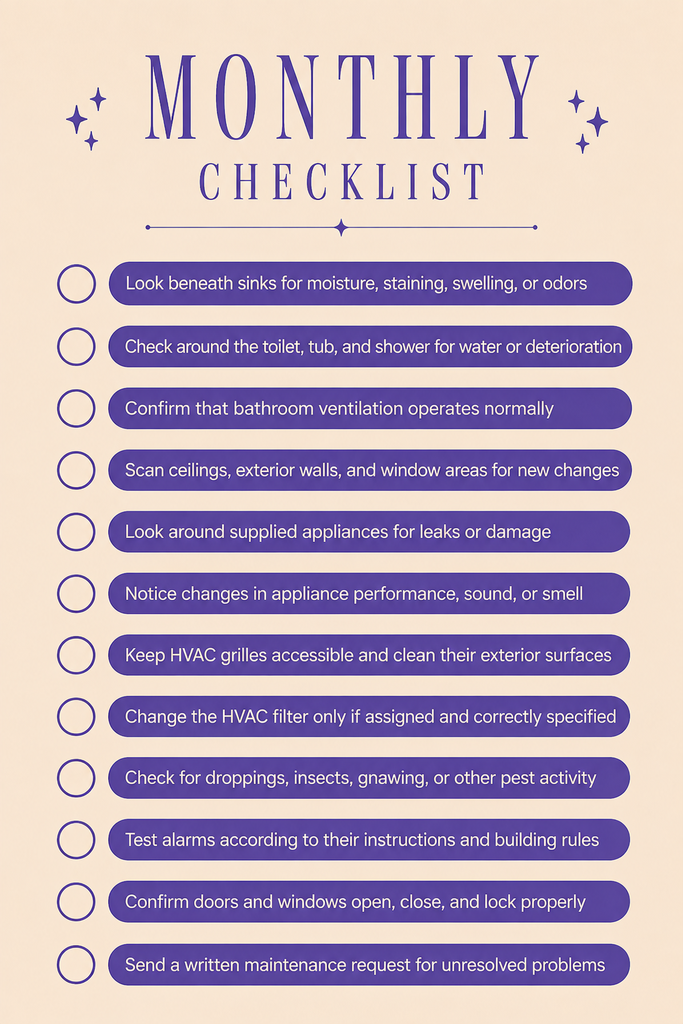
Once a month, walk the same route: kitchen → bathroom → windows and ceilings → appliances and HVAC → alarms and entry. Consistency makes new changes easier to spot. You are not performing a technical inspection; you are looking at accessible areas during normal use.
1. Start in the Kitchen
Open the cabinet beneath the sink and inspect the cabinet floor, visible lines, drain area, and back wall without twisting connections. Look for droplets, swelling, staining, corrosion, or a musty smell; run the faucet normally and check again.
Look around the dishwasher and refrigerator for water, damaged flooring, or a new odor, but do not pull out or disconnect a heavy appliance. Report leaks, repeated error codes, scorch marks, or a significant performance change. Clean an accessible range-hood grease filter as directed; report a fan that fails or produces an electrical odor.
2. Move to the Bathroom
Look around the toilet base and tub or shower edges. Report movement, water, damaged flooring, loose tile, or caulk that repeatedly opens. Do not reseal a surface when water may already be entering behind it; new caulk can hide the symptom.
Confirm that ventilation works and notice bubbling paint, growing stains, persistent condensation, musty odor, or recurring visible growth. Remove hair from an accessible drain cover if permitted, but report repeated slowing, backup, unusual sounds, or sewage odor.
3. Scan Windows, Walls, and Ceilings
Look above windows, below sills, and along ceilings for new marks, peeling paint, soft drywall, wet carpet edges, or repeated condensation. Dry condensation, use normal ventilation, and record when it happens; report it if it persists or damages material. Do not paint over stains before management sees them.
Confirm that windows and doors open, close, and lock. Report loose glass, failed locks, water entry, or a problem affecting an exit route. Do not force a jammed component.
4. Observe Appliances, HVAC, and Vents
Keep furniture, curtains, and boxes away from vents. Clean accessible covers gently, but do not open ducts or panels. If the lease assigns filter changes to you, use the specified filter and record the date; otherwise ask.
Report loss of heating or cooling, water near equipment, repeated shutdowns, burning or gas-like odors, loud new sounds, or unusually weak airflow. Clean a supplied dryer’s lint screen as directed, but do not alter its venting.
5. Finish With Alarms and the Entry
Test smoke and carbon monoxide alarms with their test buttons according to manufacturer and building instructions; never remove batteries to silence them. Confirm that doors and permitted window locks work and that belongings do not narrow exit routes or occupy common hallways.
Copyable Monthly Checklist
Seasonal Checks for Renters
At the first heating or cooling changeover, notice whether the system starts, produces airflow, and maintains a reasonable temperature. Report persistent burning, electrical, or gas-like odors instead of diagnosing them.
During humid periods, watch for recurring window condensation, damp closets on exterior walls, and musty odors behind furniture. Use permitted ventilation or dehumidification, but report leaks or continuing dampness. Before freezing weather, follow property instructions for heat settings, outdoor faucets, balcony items, and plumbing access; do not manipulate shared systems based on generic advice.
Keep personal items away from a balcony or patio drain. Report loose railings, damaged walking surfaces, or poor drainage rather than attempting exterior repairs.
Problems Renters Should Report Immediately
“Immediately” may mean calling the building’s emergency line rather than submitting a routine portal ticket. Learn that distinction before a problem occurs.
Active Water Intrusion
Report water entering from a ceiling, wall, pipe, toilet, window, water heater, or appliance. If safe, move people and belongings away and contain minor dripping temporarily. Avoid nearby electricity, and never puncture a bulging ceiling or open a wall.
Electrical Warning Signs
Sparking, smoke, scorch marks, crackling, burning odor, shocks, hot outlets, exposed wiring, or repeatedly tripping breakers require prompt attention. Stop using the affected item if safe and contact the appropriate urgent service. Do not remove outlet covers or reset a breaker repeatedly.
Carbon Monoxide, Gas, or Fire Concerns
Carbon monoxide has no color or odor. If a CO alarm sounds, leave for fresh air, call 911 or the fire department, account for everyone, and do not reenter until responders permit it. Do not search for the source. If you smell gas or suspect a gas leak, leave and call the utility emergency number or 911 from a safe location; a portal message is not an emergency response.
Loss of Essential Services or Security
No heat in dangerous cold, loss of water, sewage backup, a front door that cannot lock, or another condition affecting immediate habitability or security should use the designated urgent channel. The exact legal standard and response time vary by location; describe the facts rather than trying to assign a legal label yourself.
Significant Moisture, Mold, or Pest Activity
Report plumbing leaks and moisture promptly. Recurring growth, strong musty odor, wet porous material, or a large affected area is not merely housekeeping. Repeated rodent sightings, bed bugs, cockroaches, or activity spreading between units may require coordinated treatment. Photograph visible evidence without disturbing wall cavities, nests, or droppings.
Repairs Renters Usually Should Not Improvise
Unless you have explicit authorization and the task is genuinely assigned to you, avoid work involving:
- electrical wiring, outlets, breakers, or hardwired alarms;
- gas lines, fuel-burning appliances, or suspected carbon monoxide sources;
- pipes inside walls, shutoff changes, or supplied plumbing fixtures;
- opening HVAC equipment, ducts, water heaters, or supplied appliances;
- cutting into walls, ceilings, floors, tile, or waterproofing;
- structural components, railings, windows, exterior doors, or locks;
- extensive mold, sewage-contaminated water, or widespread pest treatment.
An unauthorized repair can introduce a safety problem, damage the property, complicate insurance, or make the original cause harder to prove. A temporary action that limits damage—placing a bucket beneath a drip, for example—is not the same as completing the repair.
How to Write a Maintenance Request That Helps
“The sink is broken” forces the maintenance team to start by asking questions. A useful report gives observable facts without guessing at the diagnosis.
Include:
- Exact location: “Kitchen cabinet under the sink, back-left corner.”
- What you observed: water, odor, sound, stain, error code, temperature, or loss of function.
- When it began: an approximate date and whether it is constant or intermittent.
- What makes it happen: for example, water appears only while the faucet runs.
- Whether it is worsening or urgent: active flow, affected electricity, no lock, no heat, or another immediate concern.
- Clear photos or a short video: include a wider view and a close view when safe.
- Access information: how management should arrange entry, following the lease and local rules.
Sample Maintenance Request
Subject: Water appearing under kitchen sink — Unit 4B
Hello,
I noticed water inside the kitchen sink cabinet today, September 2. It appears near the back-left corner while the faucet is running and stops afterward. I dried the cabinet, but the area became wet again during a second normal use. I have attached one wide photo and one close-up. There is no water near an outlet, but I am avoiding use of the cabinet until it can be checked.
Please confirm that you received this request and let me know how access will be arranged.
Thank you.
Keep the sent message, ticket number, attachments, and replies together. If the condition changes, update the existing request so the timeline remains clear.
Common Apartment Maintenance Mistakes
| Mistake | Why it causes trouble | Better approach |
|---|---|---|
| Waiting until move-out | Damage may grow for months | Report changes when they appear |
| Diagnosing the cause | A guess can distract from useful facts | Describe location, timing, and visible change |
| Treating every mark as dirt | Cleaning cannot repair hidden moisture | Report discoloration or odor that returns |
| Using aggressive products | Chemicals can damage finishes or react dangerously | Follow labels, never mix products, and use approved care methods |
| Blocking vents or access | Systems cannot work or be reached properly | Keep vents, equipment, heaters, and exits clear |
| Staying silent to protect the deposit | Unreported damage may worsen | Create a factual, dated written record |
What If the Landlord or Property Manager Does Not Respond?
Follow up in writing and refer to the original date and ticket number. Use the escalation route stated in the lease or resident portal. Continue recording changes with dates and images, especially if water, temperature, security, or health conditions are worsening.
For an immediate threat, contact the appropriate emergency service rather than waiting for an ordinary maintenance reply. For a continuing non-emergency dispute, consult official tenant information for your state or city, a local housing agency, or qualified legal aid.
Do not assume that withholding rent, paying for a repair and deducting the cost, breaking the lease, or denying entry is allowed. The requirements and remedies differ by jurisdiction and situation. Get location-specific guidance before taking a step with contractual or financial consequences.
Frequently Asked Questions
What maintenance is a renter responsible for?
It depends on the lease and local law. Renters are commonly expected to keep the unit reasonably clean, avoid preventable damage, use fixtures properly, and report problems promptly. Specific items such as filters, bulbs, batteries, pest treatment, yard care, or minor repairs may be assigned differently.
Should renters change HVAC filters?
Only when the lease, property instructions, or management clearly assigns the task to the renter. Confirm the correct size, type, direction, location, and replacement schedule. Do not open equipment panels or substitute a filter simply because it fits.
Who fixes a leaking faucet in a rental apartment?
Repair responsibility varies, but a leak involving a supplied plumbing fixture should be reported promptly. The renter can document when and where it leaks and limit avoidable water exposure without dismantling the faucet.
Should I report a small leak immediately?
Yes. Small leaks can wet cabinets, floors, walls, or neighboring units before the damage becomes obvious. State that the flow is small, but do not wait for it to become an emergency before reporting it.
Can a renter make repairs without permission?
Do not assume so. Review the lease and obtain written authorization when required. Even a well-intended repair may alter property, affect a warranty, or interfere with the owner’s preferred contractor and documentation.
How often should I inspect my apartment?
Notice changes during weekly cleaning and complete a deliberate walk-through about once a month. Add seasonal checks for climate, heating or cooling changes, and any balcony or patio included with the unit.
What should I do when an alarm chirps?
Identify the alarm and check its manufacturer’s instructions. A chirp may indicate a low battery, fault, or end of service life. Follow the lease for battery responsibility and report a missing, damaged, expired, hardwired, or nonworking unit. Never disable an alarm to stop the noise.
A Renter’s Best Maintenance Tool Is Early Notice
You do not need to inspect the building like a contractor or repair systems you do not own. Keep ordinary moisture and residue under control, walk the same route monthly, and distinguish between a surface you can clean and a cause someone must repair.
The best renter maintenance routine is the one that catches a damp cabinet, failing lock, unusual odor, or growing ceiling stain early—and reports it clearly enough for the right person to act.